
Why White Interior Doors Are Perfect For Modern Homes?


It is never an accident to find white interior doors in well-arranged contemporary homes. Homeowners and interior decorators choose them for their special ability to relieve them of a multitude of interior design headaches at once. Their influence makes life much easier by "giving life" to the interior space and providing opportunities for improvement.
Furthermore, these unique door types reduce visual friction, support spatial flow, and can also adapt as you make certain changes or upgrade the interior. Their effectiveness isn't just a function of novelty but a matter of how they consistently perform across different layouts, rooms, and design blueprints.
In this guide, we explore why white interior doors are perfect for modern homes and how they can enhance your home's current visual appeal.
Role of Interior Doors in Modern Design

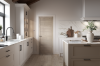
Image shows Ely White Primed Internal Door
Today, homeowners don't treat doors as decorative features in modern interiors. Most people consider their role strictly architectural. As a result, they expect interior doors to comfortably sit within clean wall panels and maintain rhythm along corridors without unnecessarily interrupting sightlines.
The door is usually more noticeable when it doesn't blend in, as contemporary spaces typically rely on fewer visual elements overall. The wrong decorative combination can undermine an otherwise cohesive interior if the grain is heavy, the colour contrast is too strong, or it has overly detailed profiles. As a result, designers lean towards restraint, which usually leads them to settle for white.
Why White Interior Doors Work So Well in Contemporary Spaces?

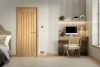
Image shows Cambridge White Primed Internal Door
You can easily trace the success of white interior doors in modern homes to five core reasons. These are not random. Rather, each reason addresses a practical or visual requirement that contemporary interiors demand.
1. Preserve Visual Continuity
Modern homes thrive on uninterrupted surfaces on purpose. They avoid "doing too much" to prevent disrupting the "vibe" of the home. For instance, the owners keep the walls free of ornament as they make the transition between rooms feel deliberate rather than abrupt. No other door type or colour allows this continuity to remain intact as a white door does.
In these rooms, the eye moves through these spaces easily because the door blends seamlessly with the wall. Otherwise, it would be a visual disturbance if the door seemed to be standing apart from the wall. This arrangement is especially vital in interior spaces where you can easily see multiple doors at a glance, such as hallways and open-plan layouts. Repeating whites doesn't create disturbance or confusion; it creates rhythm without clutter.
It would be nearly impossible to achieve this effect with darker or highly textured doors, as they often break the wall's visual line and attract unnecessary attention.
2. Maximize Light Without Adding Glare
One of the advantages of using white doors is how they maximize light within the indoor space.
Research into interior perception shows that lighter colours can make a room look more spacious than it is. White internal doors reflect light evenly across the room, helping it travel further into adjacent spaces and improving the perception of spaciousness.
You will notice this effect in homes with limited window exposure, interior rooms with borrowed light, or narrow hallways. Matte or satin white doors help spread light without creating glare, unlike glossy surfaces or glass panels. It often produces a softer, more consistent distribution of light that encourages comfort and visual appeal.
3. Adapt to Changing Interior Schemes
Change is probably the most defining characteristic of modern living. People often replace furniture, upgrade layouts, and create a shift in colour palettes over time. You can't say the same thing for doors: you rarely change doors once you install them.
White doors create a stable foundation for current and future interior decoration endeavors. They continue to blend well with other materials even when wall colours constantly move back and forth from neutral to bold.
Likewise, decorators and homeowners can shift flooring materials from tile to wood without the headache of rethinking door finishes. This ability to adapt to virtually any interior decoration upgrade or change is one of the reasons most people frequently specify white doors in long-term residential projects.
Modern white internal doors do not just fit one single style moment. They encourage positive change in the home without creating visual conflict.
4. Allow Architecture and Materials to Lead
Modern design emphasizes these core elements: form, proportion, and material quality. These elements would have to compete with doors that are visually deafening. Meanwhile, white doors quietly step back, allowing other elements to shine.
The restraint that white doors show in letting other materials have the spotlight allows:
- Architectural details to read clearly
- Material transitions to feel intentional.
- Hardware to become a controlled accent and not a distraction
Besides the core modern design elements, peripherals like hinges, handles, and frames also gain importance when you pair them with white. Black, brushed steel, or minimalist hardware options become more legible against a neutral background. In the end, the door plays a supporting role and doesn't come off as the main act.
5. Communicate Cleanliness and Precision
White has a rather unspoken association with cleanliness and order. Modern interiors usually leverage this association deliberately to achieve the desired result. White doors in the home signal precision, clarity, and care in execution.
Leveraging these unique characteristics of white doors is not about sterility. It is about eradicating the presence of visual confusion. The edges, alignments, and reveals become more noticeable when the doors are white. While poor installation shows quickly, expertly installed doors reinforce the space's overall quality.
White doors are a logical choice for designers and builders confident in their workmanship.
Light, Space, and Visual Continuity

Image Shows Eton White Primed Internal Door
White internal doors influence how a home feels as a whole, and not just the individual rooms. Rather than feeling compartmentalized, they help spaces relate to one another.
This is particularly effective in homes with long sightlines, renovations where new and existing spaces must coexist, and minimalist interiors with limited colour variation. Even in cases where room functions vary, white doors provide a consistent visual language that often blends different areas.
Research has shown that 75% of respondents report improved natural light performance in homes with bright interior spaces. This enhances the perception of brightness across interconnected spaces.
Where White Doors Perform Best in the Home?
The versatility of white doors means they can go anywhere within the house's interior. However, installing them in certain rooms brings out the best in these spaces.
1. Bedrooms
White bedroom doors create a calm transition into private spaces. They are perfect for both soft, neutral bedrooms and darker, more intimate schemes. The best part is, they don't impose a style of their own in these areas.
2. Living Areas and Hallways
White doors prevent visual overload in shared spaces. This is especially valuable in homes with multiple adjoining rooms.
3. Bathrooms and Utility Spaces
You get practicality without sacrificing consistency when you install moisture-resistant white doors with appropriate finishes in your utility spaces.
Choosing the Best White Interior Doors

Image Shows Coventry White Primed Internal Door
You have to consider more than just colour when choosing the best white interior doors for your interior spaces. Besides colour, the core material, construction quality, and finish all matter.
Consider the following:
- Solid-core construction
- Factory-applied finishes
- PreFinished Doors Professional finish which saves time and effort
- Compatibility with modern hardware
- Acoustic and fire performance
- Primed Doors which serves as the perfect foundation for personalisation, allowing you to experiment with different colour schemes and accents
- Trimming Allowance
Well-made white doors quietly do the difficult job without drawing attention to themselves.
FAQ
1. Are white doors hard to maintain?
With the right finish, they are not. High-grade eggshell paints make it easier to wipe off fingerprints or scuffs without the discolouration of old gloss.
2. Which hardware suits white doors best?
Many. However, some of the top door makers recommend brushed brass & matt black handles for a sharp, contemporary contrast that upgrades its visual appeal.
3. Which flooring type works best with white doors?
White is a neutral colour. It acts as a clean transition and blends well with various flooring types, including white oak, polished concrete, and dark espresso hardwoods.
4. Do white doors maximize limited natural light?
Yes. White doors reflect light in dark rooms and hallways, making small rooms look bigger, especially in the UK's largely overcast climate.
Final Thoughts
Modern homes demand clarity. They punish excess and reward restraint in the same space. White interior doors are a success in this area because they support this idea on all fronts. Not only do they enhance light, but they also preserve continuity and permit other elements or materials to shine.
Their value comes from reliability, not trendiness. That reliability is what separates thoughtful design from conventional decoration in contemporary interior spaces.
When you carefully examine white doors, you realise that they are not just appropriate for modern homes: they are fundamental to them.
About the Author







 Processing
Comments